The most confusing part of JavaScript is the
this keyword. You will understand what
this really is and how its value changes, and you will see practical examples you can remember.
Think of
this as the
owner of the function. It is a special keyword that always points to the current context.
Understanding the JavaScript this Keyword
this points to the parent or context of the function that is holding it. The value depends on how and where the function is called.
JavaScript this Keyword in Object Methods
Create an object with a property and a method that uses
this.
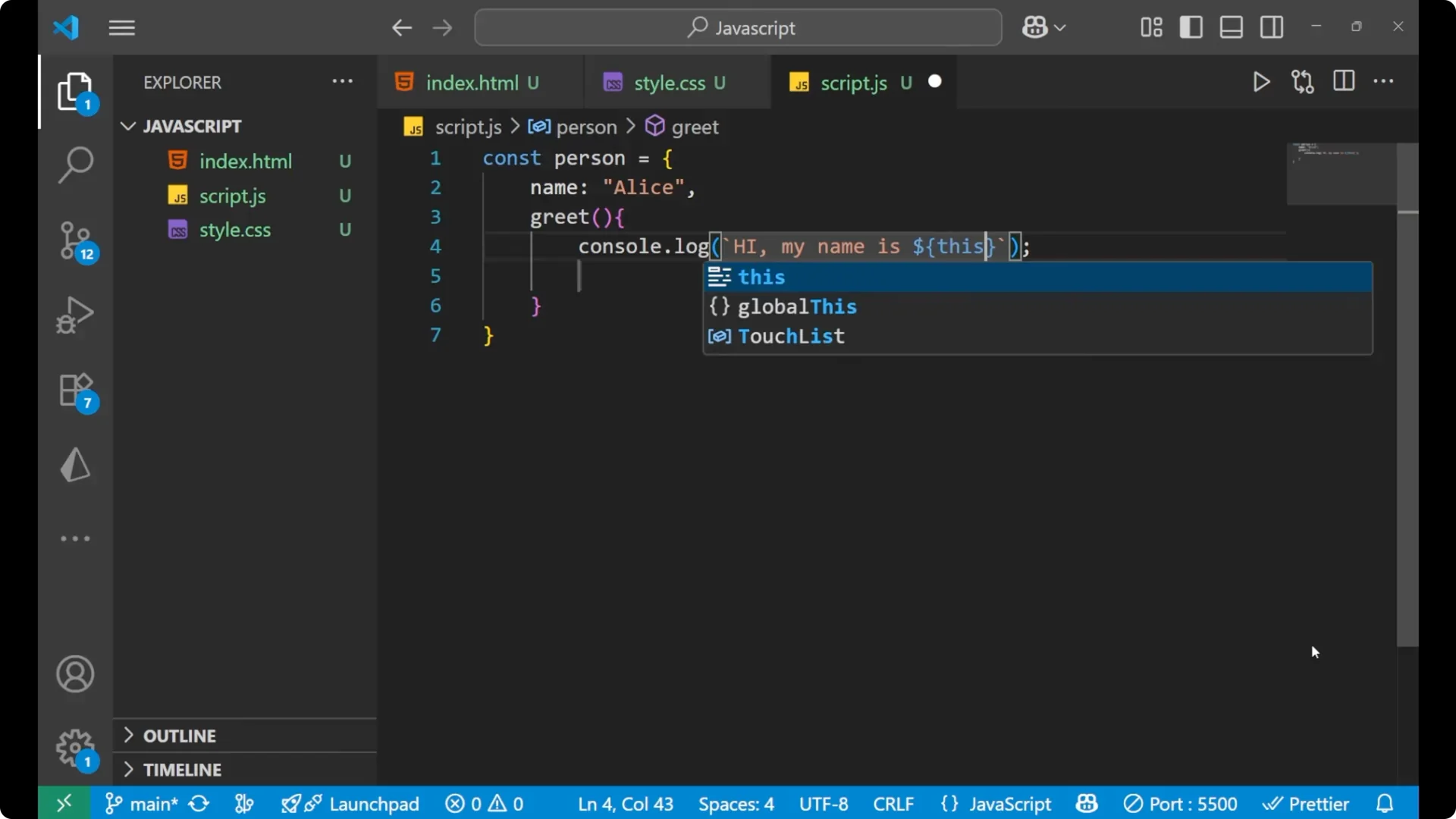
Call the method to see how
this points to the object that owns the method.
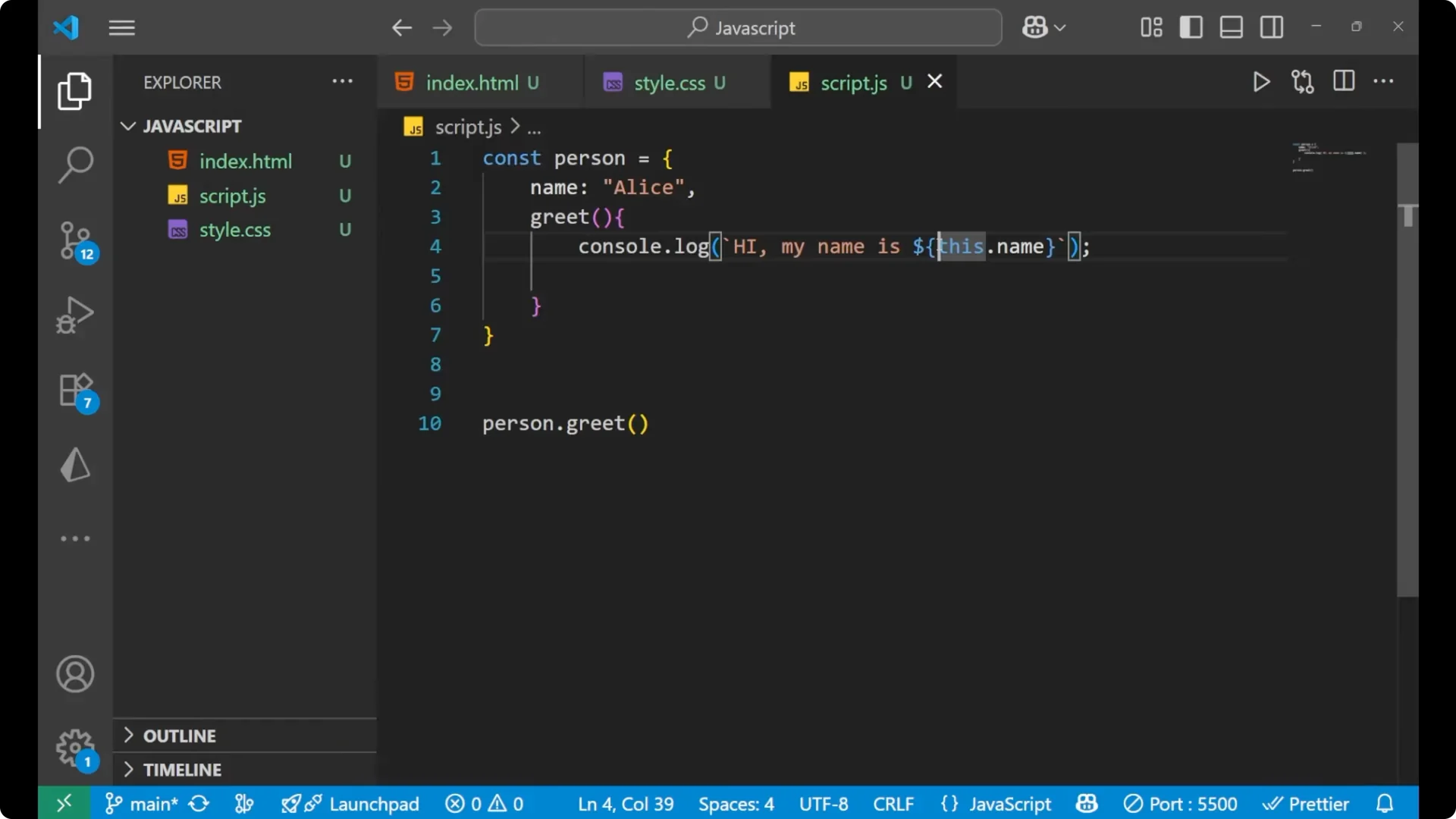
const person = {
  name: 'Alice',
  greet() {
    console.log(`Hi my name is ${this.name}`);
  }
};

person.greet();
// Output: Hi my name is Alice
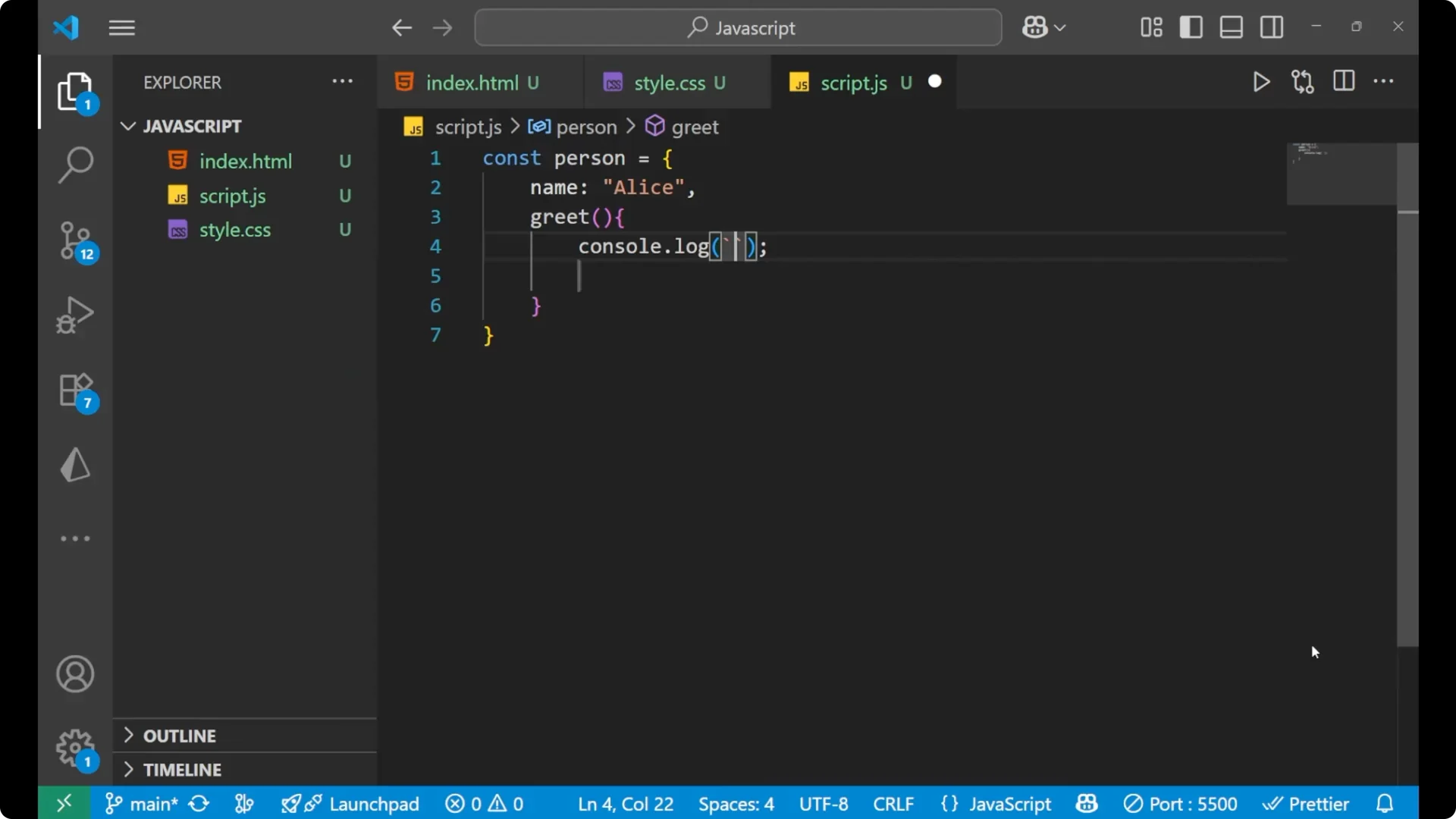
Here, the function holding
this is `greet`. The parent or context of `greet` is the `person` object. That is why `this.name` returns `Alice`.
JavaScript this Keyword in a Standalone Function
If a function is not inside any object and you log
this, it will take you outside of that function. Outside the function in a browser you have the global object, which is `window`.
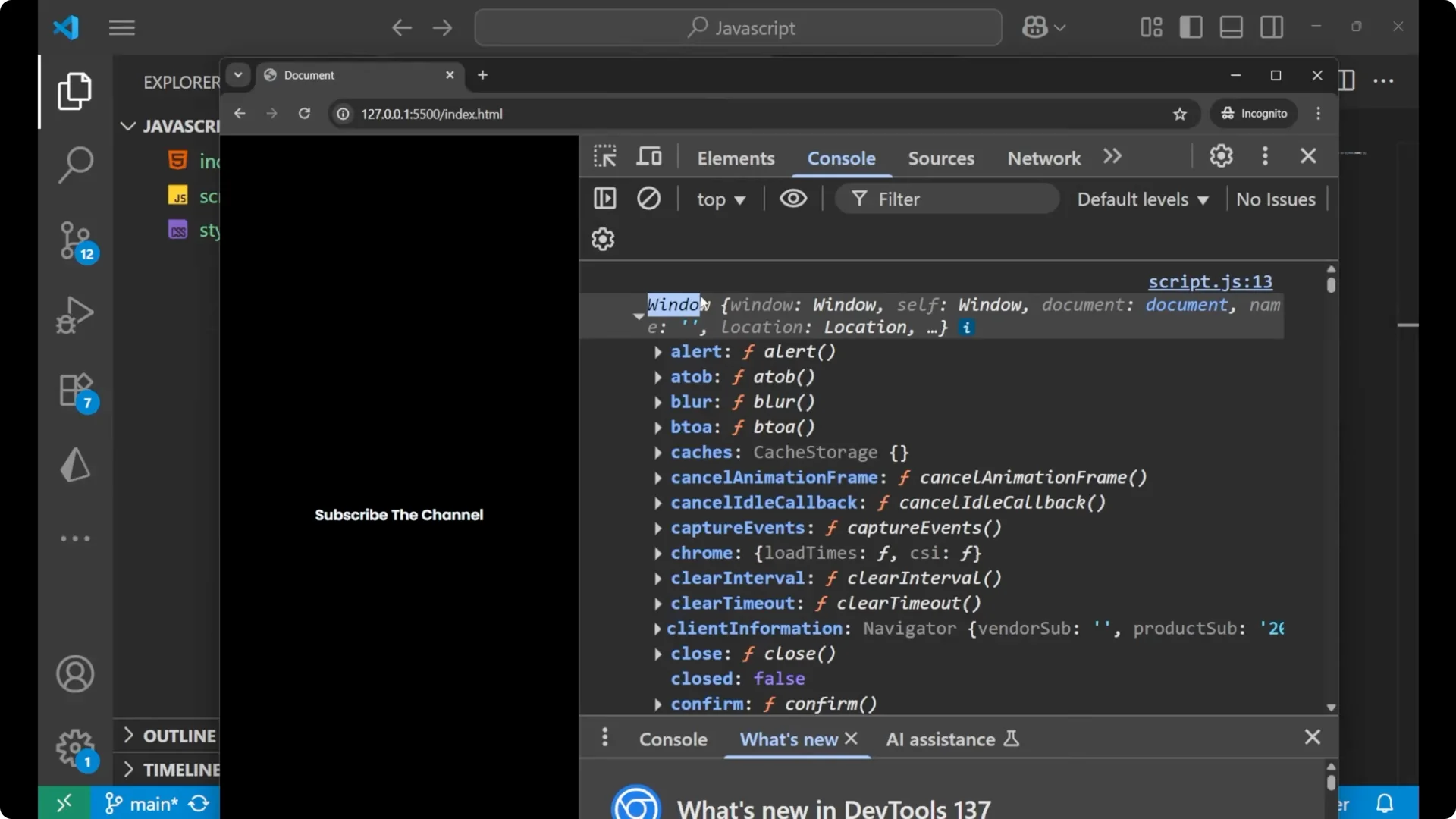
function showThis() {
  console.log(this);
}

showThis();
// Output in a browser: window { ... }
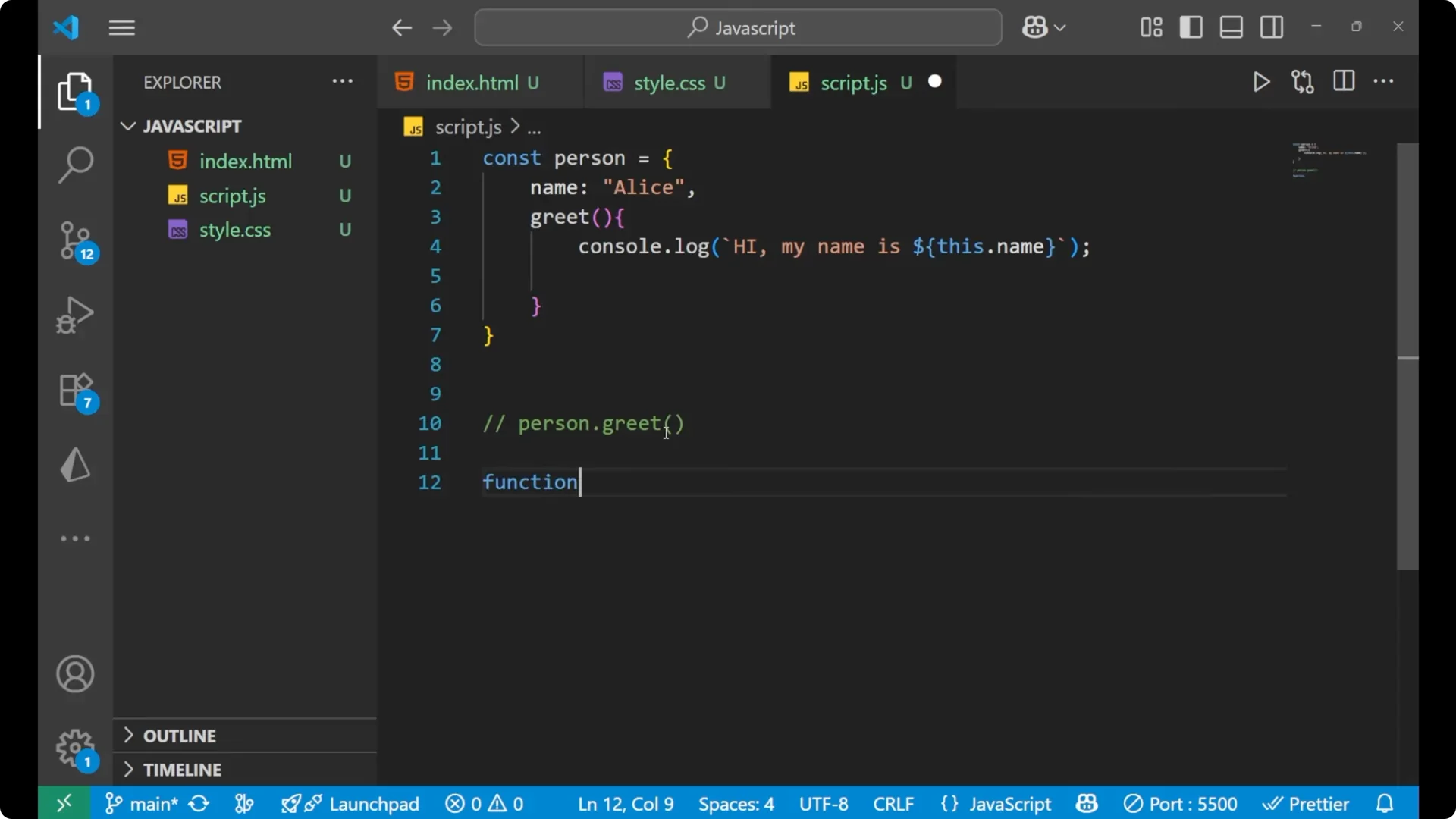
The function holding
this is `showThis`. It does not have a parent object, so
this refers to the global object.
JavaScript this Keyword in Nested Functions Inside a Method
If you define an inner function inside a method and use
this inside the inner function, you may not get the object’s properties.
Write a method with an inner regular function that logs `this.name`, then call the method.

const person = {
  name: 'Alice',
  greet() {
    function inner() {
      console.log(`Hi my name is ${this.name}`);
    }
    inner();
  }
};

person.greet();
// Output: Hi my name is
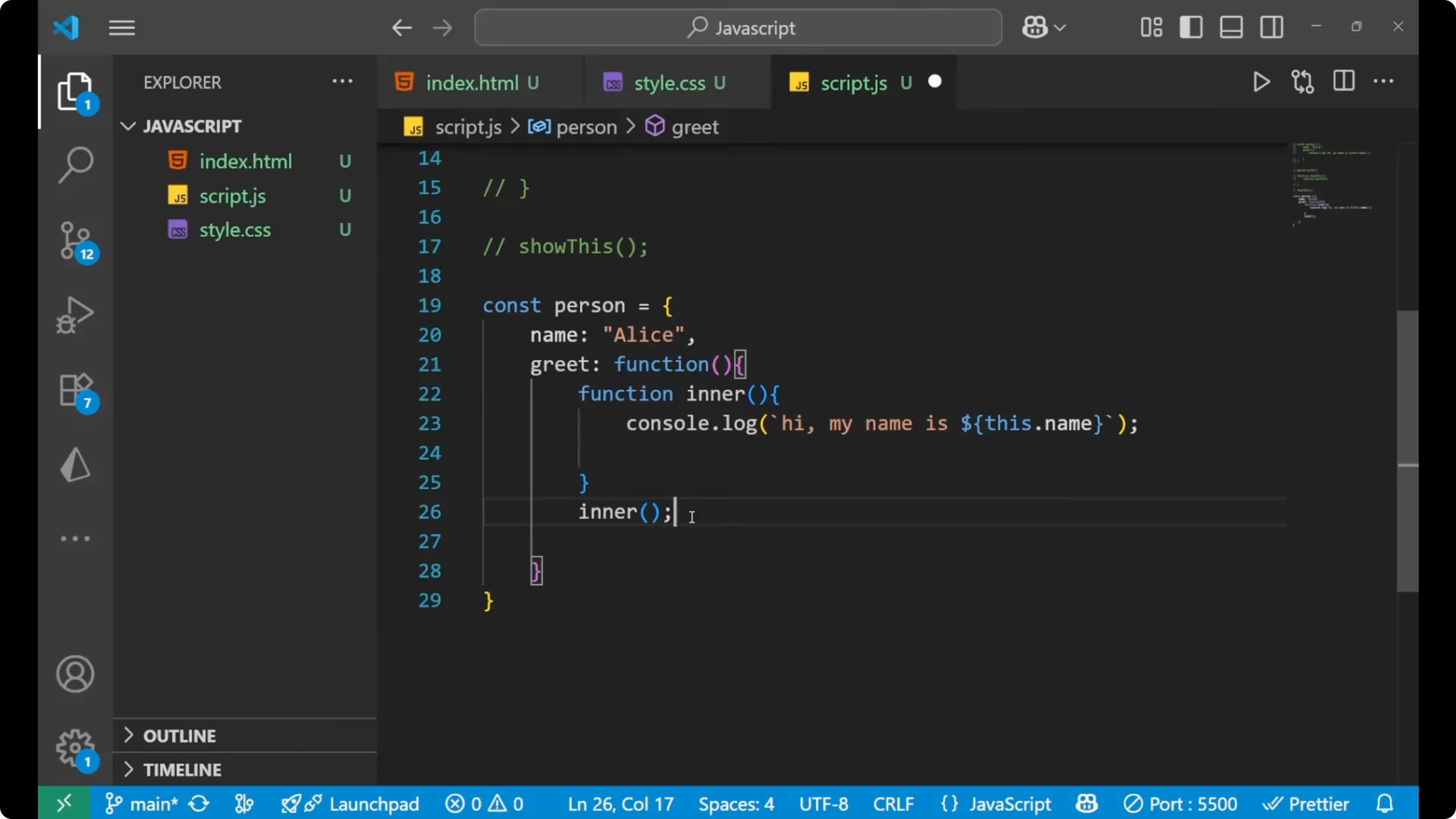
The
this inside `inner` is not the same as the
this inside `greet`. The inner regular function has its own
this, and it stops at the function that holds it. The `greet` function does not have a `name` property, and it does not go to `person` in this case.
Fixing It With Arrow Functions
You can fix this by making the inner function an arrow function. The key concept is that
arrow functions do not have their own this.
Replace the inner function with an arrow function and call it.
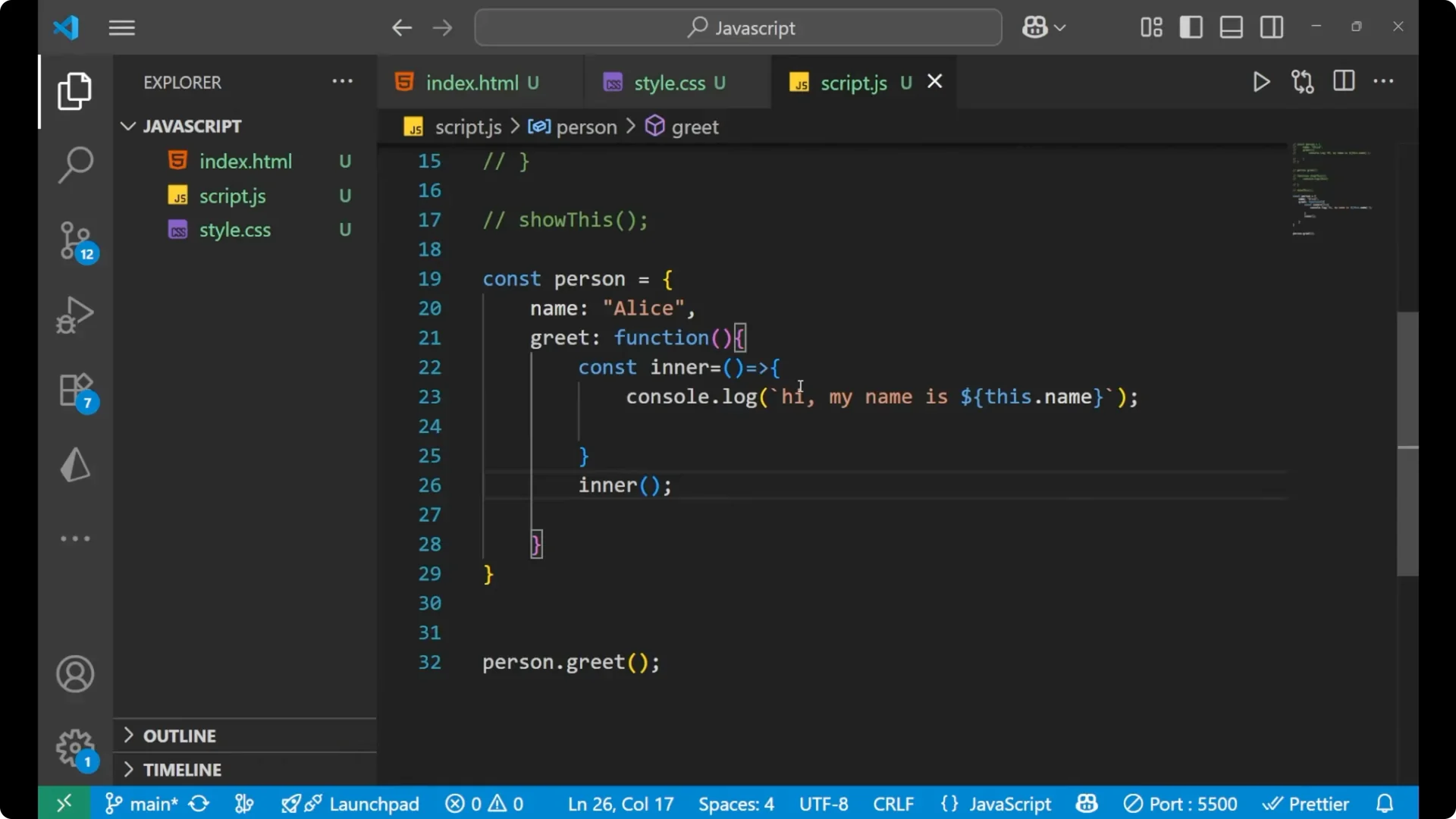
const person = {
  name: 'Alice',
  greet() {
    const inner = () => {
      console.log(`Hi my name is ${this.name}`);
    };
    inner();
  }
};

person.greet();
// Output: Hi my name is Alice
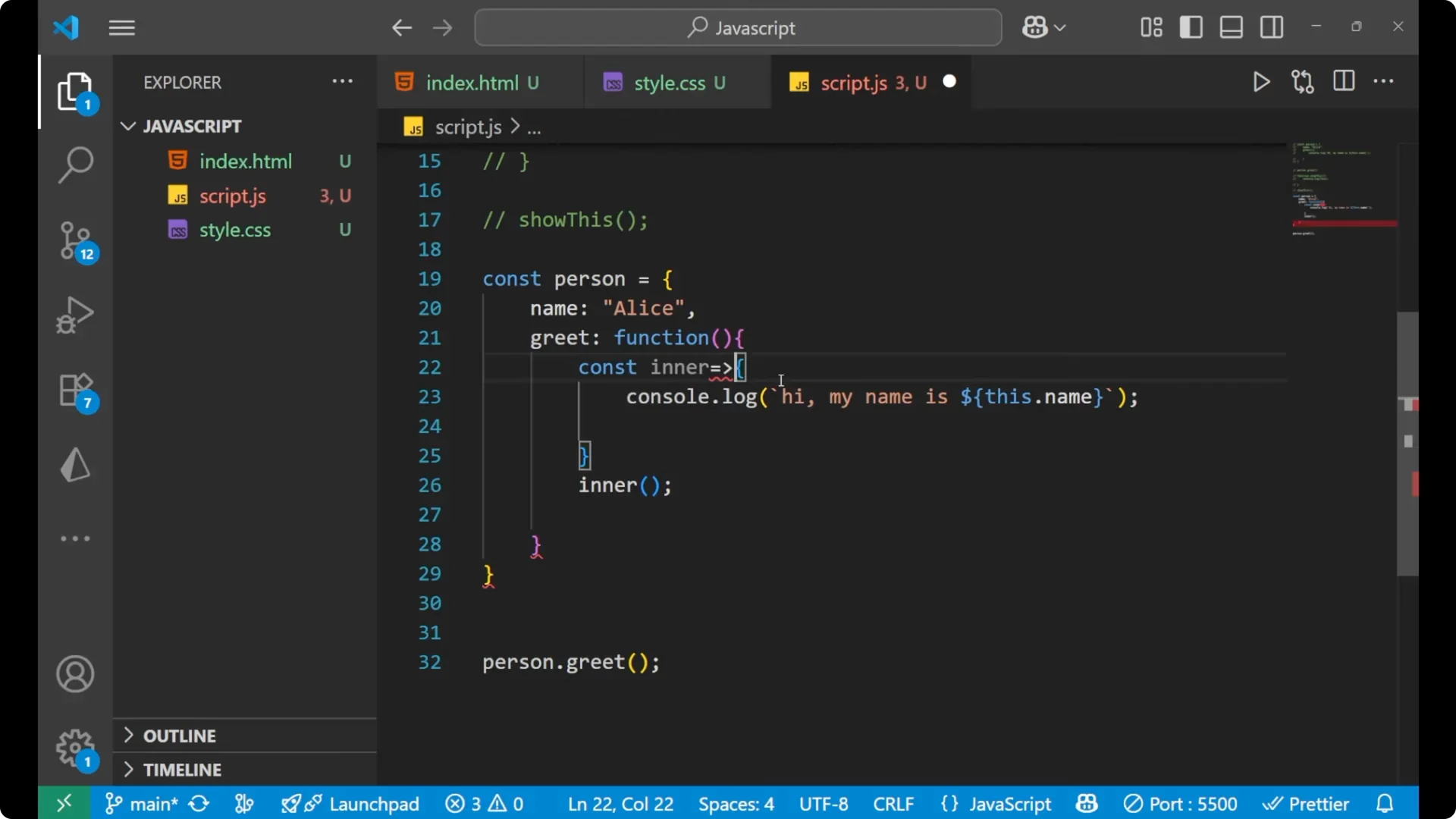
Because arrow functions do not have
this, the function that is holding
this is actually `greet`, and the parent of `greet` is `person`. That is why `this.name` correctly resolves to `Alice`.
Final Thoughts on the JavaScript this Keyword
this points to the current context and changes based on how the function is called. In an object method,
this refers to the object. In a standalone function,
this refers to the global object in a browser. In nested regular functions,
this does not automatically refer to the outer method’s object, but using an arrow function allows
this to resolve through the outer scope and return the expected value.